
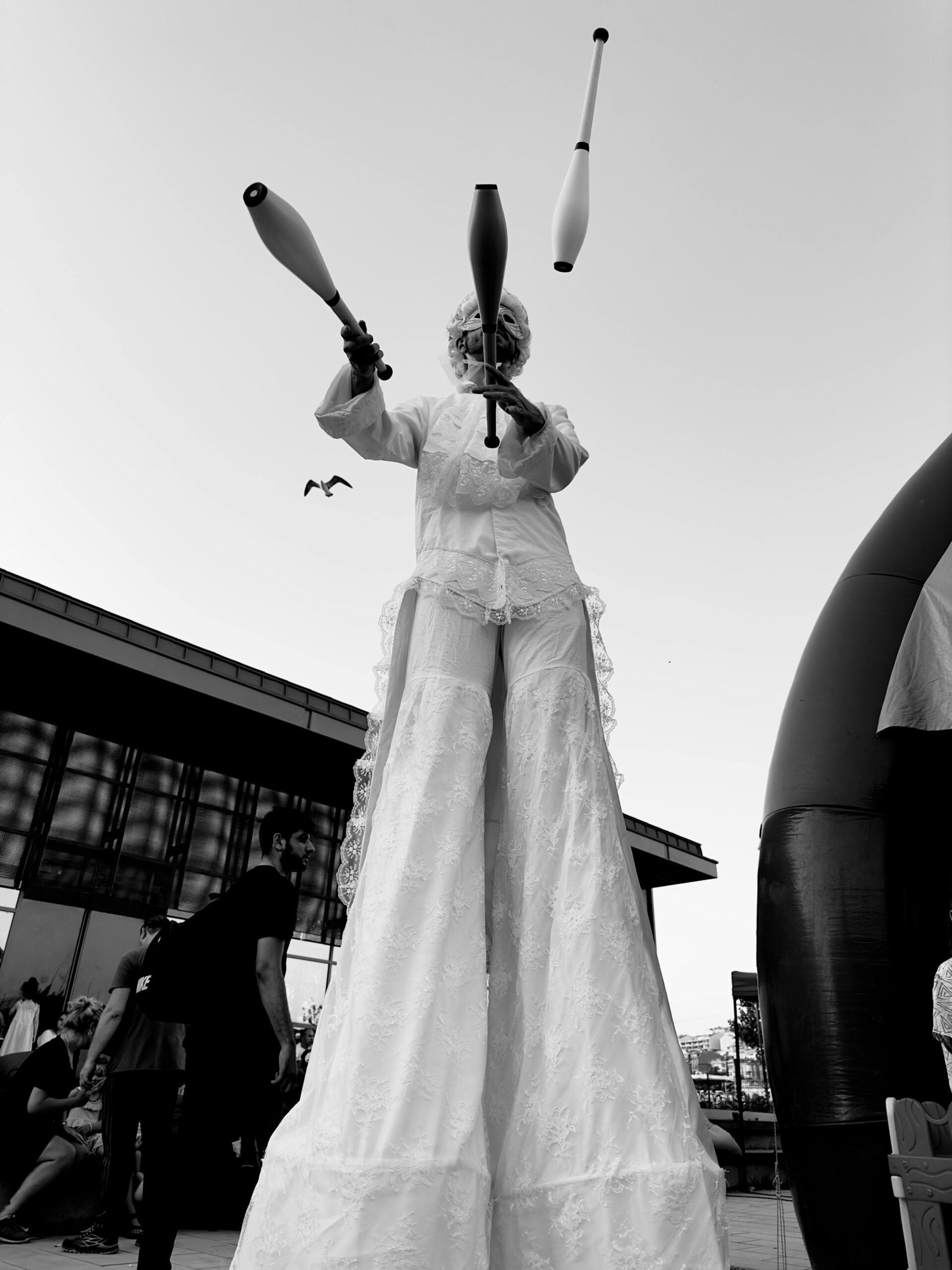

I have been juggling for many years, but have never made it to more than a five ball cascade. Juggling three wasn’t so hard, four only a bit more challenge, but five took months of practicing. I would love to do more, but usually I am fine with what I can already do.
But what about the 613-Club Cascade? No, it’s not an extreme juggling challenge (though it would be impressive). Instead, it’s a way to think about mitzvot, the 613 commandments in the Torah, and how they function in Jewish life.
Our tradition teaches us that no one person can fulfill all 613 mitzvot. Some mitzvot apply only to priests, some only to farmers in the Land of Israel, and others only to specific life situations. But that doesn’t mean the number isn’t meaningful.
The mitzvot are like juggling clubs, no one can keep them all in the air at once, but as a community, we do.
Each person contributes their own “cascade” of mitzvot, and together, we keep Jewish life thriving. Some people focus on acts of kindness, others on Torah study, others on ritual observance, and just as jugglers pass clubs back and forth, we rely on one another to complete the pattern.
If you’re learning to juggle, you don’t start with five clubs. Like me, you start with one ball, then two, then three. Maybe, if you have the time and patience, you can get to five or more. In the same way, Jewish practice isn’t about instantly keeping 613 commandments, it’s about finding a rhythm that works for you.
Maybe you start by lighting Shabbat candles or saying Modeh Ani in the morning.
Maybe you take on an ethical mitzvah, like giving tzedakah regularly or speaking kindly about others (no lashon hara!).
Maybe you find joy in a mitzvah you never expected, learning Hebrew, studying Talmud, or waving the lulav on Sukkot. In so many ways, it is not even about the religious aspects of these practices, it is so much more about the act of being committed to something.
Over time, you add more rituals and practices to your pattern. Some might fall away, others stick. The goal isn’t perfection, it’s participation. And every juggler knows: You will drop. A lot. That’s not failure–it’s proof that you’re learning. Judaism sees mitzvot the same way. We’re not expected to be perfect; we’re expected to try.
The Talmud teaches, “Seven times the righteous fall and rise again” (Proverbs 24:16). In juggling and in life, the key is to pick up what you dropped and start again.
One of the most beautiful parts of juggling is passing, where two or more people toss clubs back and forth, creating something bigger than either could do alone. That’s how Jewish tradition works too.
Parents and teachers pass mitzvot down to the next generation. Communities support one another in fulfilling obligations. We lift each other up when we drop something, because we all will.
No one person can juggle 613 clubs, but together, we create a living, breathing cascade of Jewish life. So grab your mitzvot, find your rhythm, and remember, it’s not about how many you can hold at once, but about keeping them moving.
Leave a Reply