
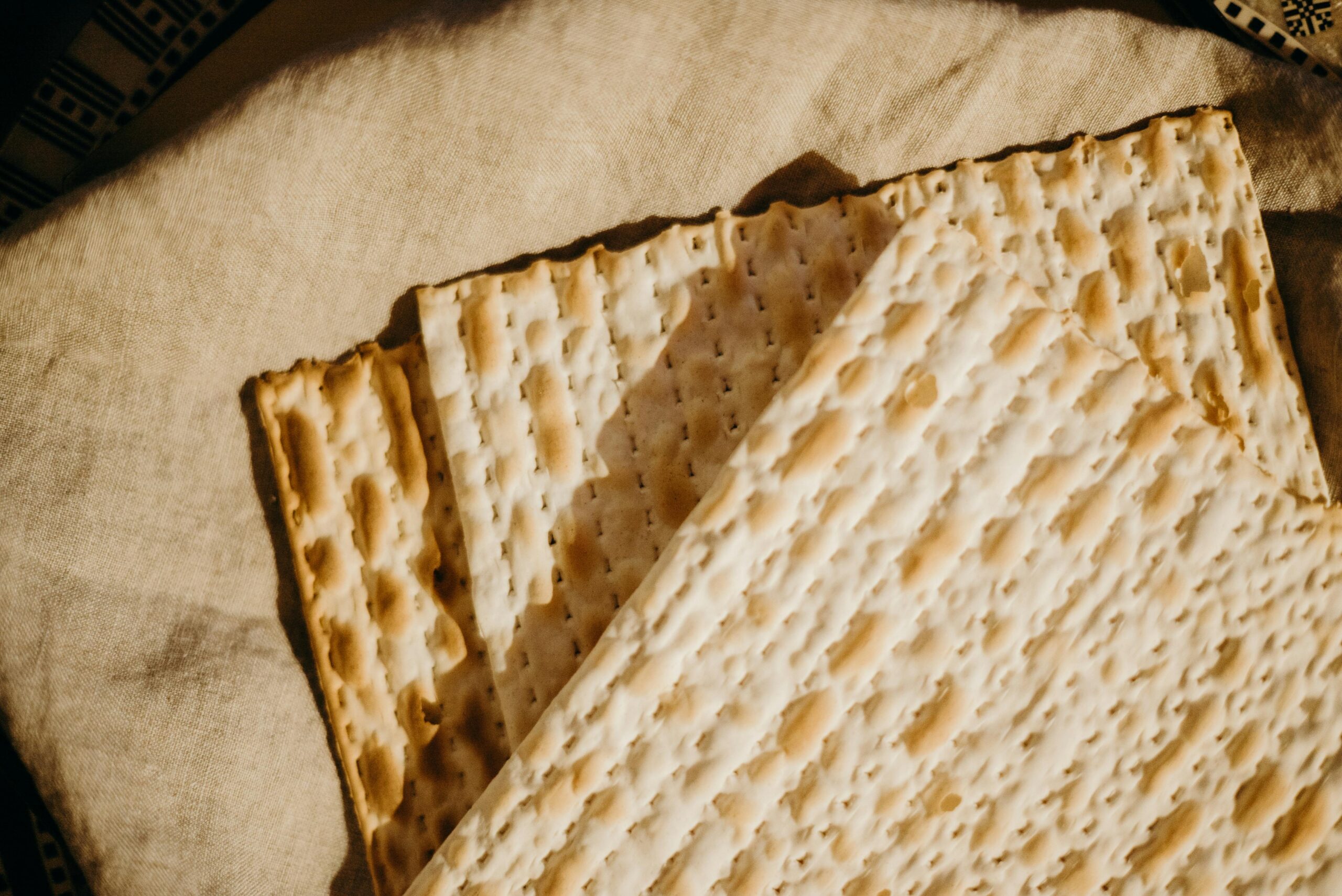
It’s one of the most important themes of Passover that the central ritual of the holiday is called a Seder, which literally means “order.” The evening is carefully structured, and there is a sequence to everything that we do. In my family we even begin the seder with the “seder song”: Kadesh, Urchatz, Karpas, Yachatz. There are four cups of wine, specific foods, specific questions, and the Haggadah lays it all out with precision. It is, on the surface, one of the most organized rituals in Jewish life.
And yet, anyone who has ever sat through a real Seder knows, the best seders are always a little bit unorderly. At may seders people talk over each other as the kids interrupt to ask when dinner will be served. Someone skips ahead and someone else tells a long story. There are songs, side conversations, spilled grape juice, and at least one moment where the leader tries (and fails) to bring everyone back to the page. And this is exactly how the seder is supposed to be. In fact, our tradition tells us that if the Seder was the same every year, then we wouldn’t be fulfilling the commandment to make it relevant. It needs to be alive and, oddly, a little bit random to make it work.
The rabbis were very clear that the purpose of the Seder is not simply to get through the text, but it instead is to spark curiosity, especially in children. The Haggadah itself tells us to actually do things to provoke questions, to change the usual patterns, to do things differently so that people will ask, “Mah nishtanah?” what is different tonight? (In my house, I always take away the seder plate before the Four Questions, until someone, on cue, asks, “Why are you taking away the seder plate?.” To which I reply, “Good question!”)
In other words, the Seder is structured, but it is not meant to be rigid. And juggling works the same way.
When I learned to juggle, like most people, I learned the basic pattern, the three-ball cascade. I tried to get the rhythm and figure out the structure. I had to make sure that the height I was throwing the balls was right, and, as I remember very clearly, also remember to breathe. In learning how to juggle, just like learning any skill, getting the foundation is the best way to start. But imagine if every juggler stopped there!
If every performance looked exactly the same, with the same pattern, rhythm, and sequence, it would quickly become boring. The art of juggling emerges when someone takes that structure and begins to play with it. They add variation, or change direction, they do something funny or surprise us. In a way, the pattern, that original core structure, is not abandoned; instead, it’s expanded. In the end, this is what keeps juggling interesting and keeps us interested in doing it.
The Seder is meant to feel the same way. While there is a framework, within it, there is room, acutally, an obligation, for creativity. If everyone at the table is fully engaged, the Seder will dynamic and maybe even a little chaotic. But just like in juggling, where the balls may seem to fly unpredictably but are actually part of a coordinated pattern, the Seder’s movement is what brings the ritual to life. If there is too much rigidity, and the experience becomes dry, but if there is too much chaos, and the structure disappears. The art is in holding both.
The goal with a seder, as with so much in life is to keep the story alive.
Leave a Reply